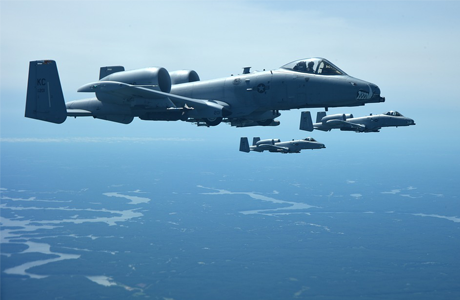
So, how was the aircraft?
The aircraft turned out to be great, in fact, still in service today before being replaced by the F-35. The cannon produced by General Dynamics was an incredible piece of machinery with an accuracy of 80% at a cone with a 12m diameter at 1,200m away.
And with the incredible survivability of the aircraft meant it could take several hits and engine failures whilst still flying. Truly an engineering marvel.
What can it do that others can’t?
There are a lot of points here, first off, I’d like to mention how short the runway has to be in order to take off compared to other fighters, this is because of how versatile it is, and how, if needed, it could take off from civilian motorways. The cannon
as said previously is incredibly powerful and accurate, with the uranium bullets easily penetrating heavy armour. The placement of the turbines above the wings prevents dust from entering them when taking off, allowing
take-off and landing in remote areas. Huge amounts of armour, a titanium bathtub around the pilot prevents damage on the interior and around 540kg of extra armour around the fuselage leads to a more resilient aircraft.